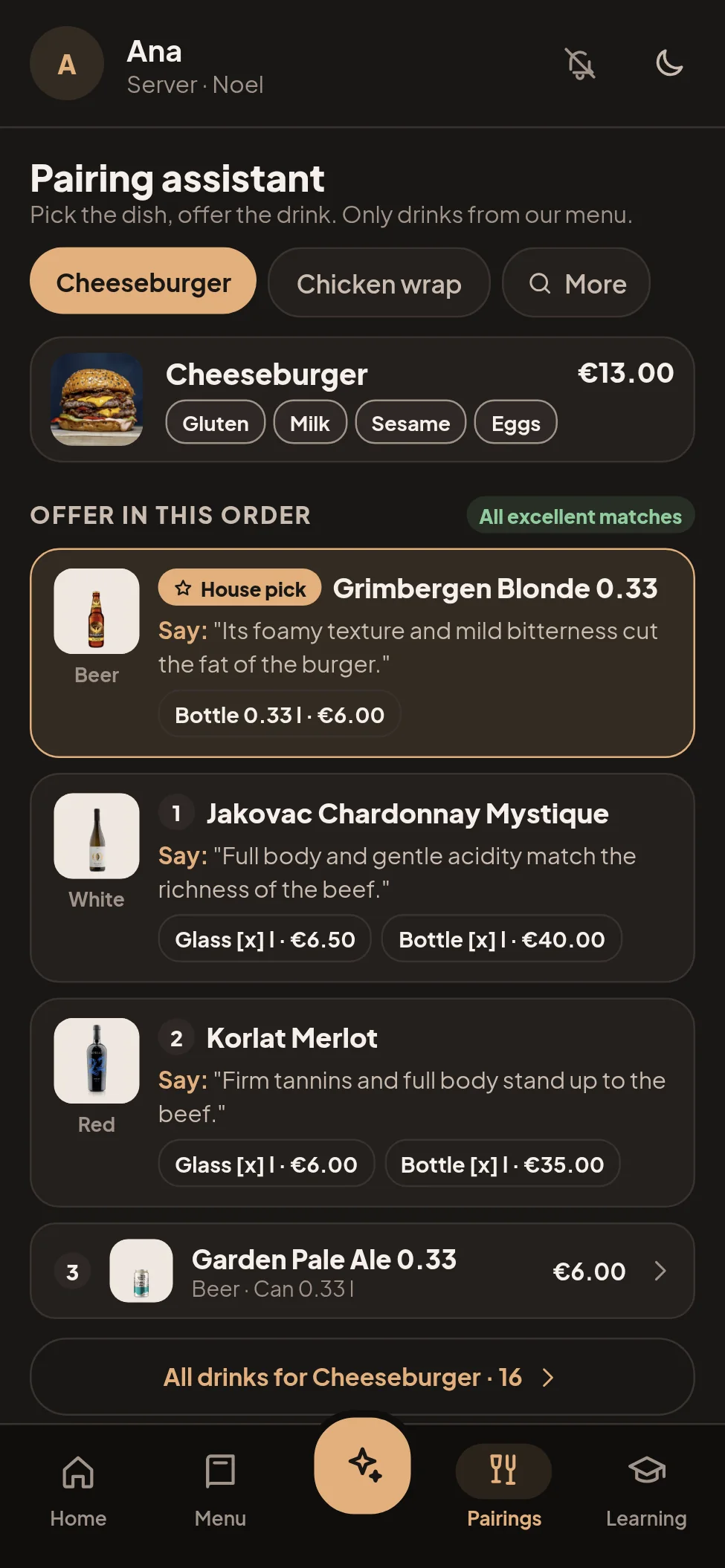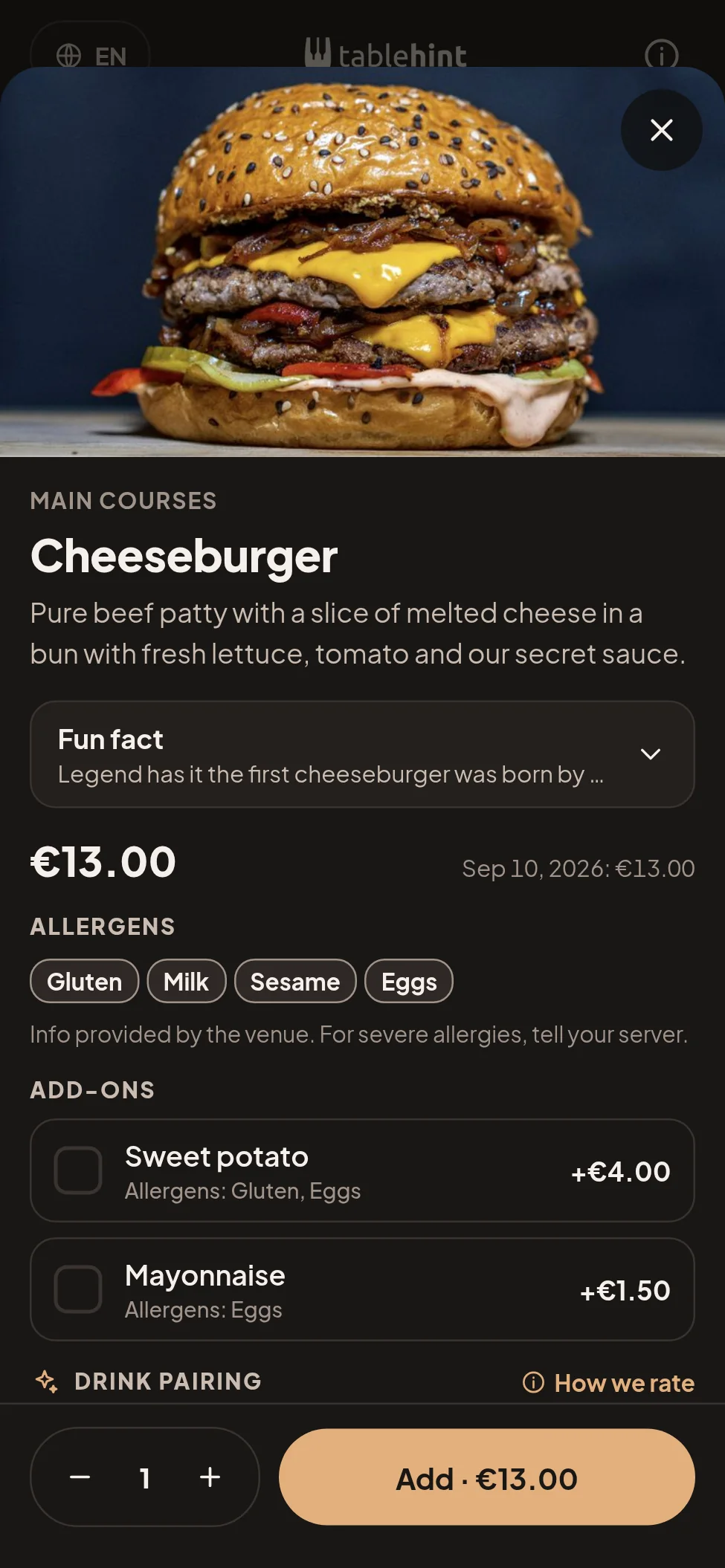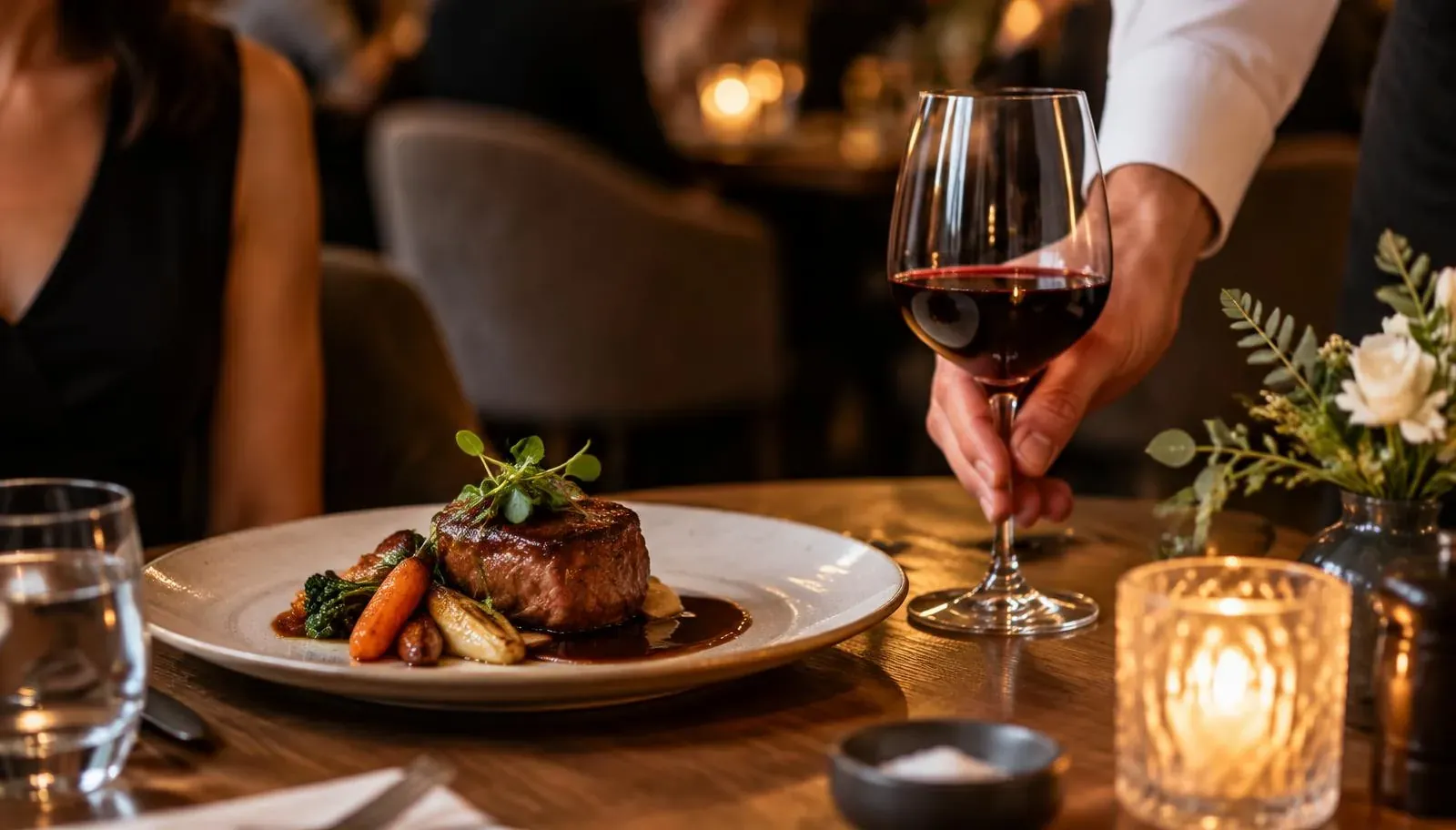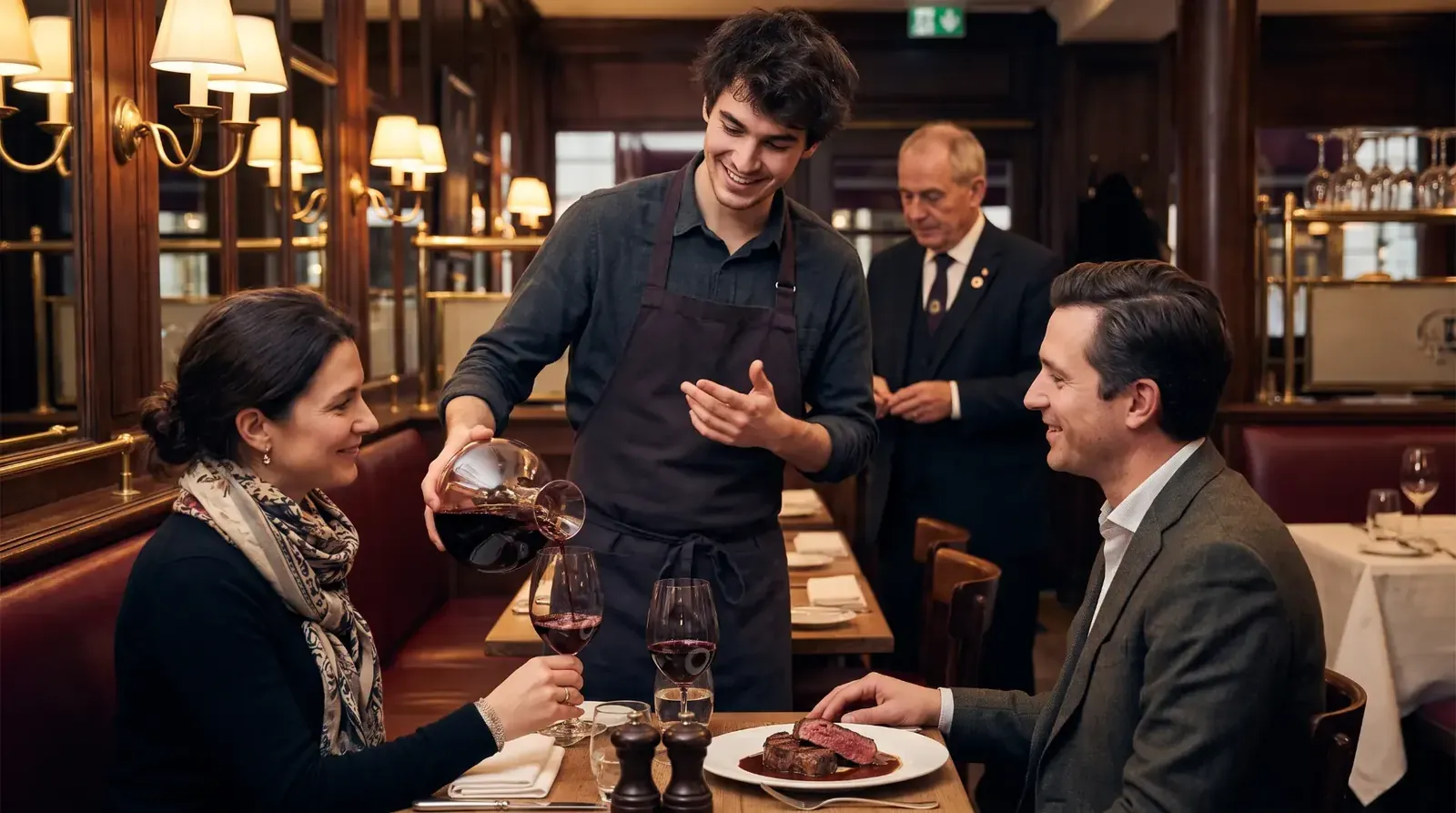
A guest sits down, glances at the menu, and within half a minute looks up: “just bring me a red,” or orders water. No one had the moment to explain, though they would rather have something better. When a server does start recommending, it often sounds like reading from a flyer.
That silence is the most expensive one in your restaurant. In that moment the server either has no time, does not know, or is afraid of sounding pushy. The good news: a recommendation that does not annoy is a skill, and it is learned faster than you would think. Good restaurant staff training starts not with wine, but with the order of the sentences.
Why does a recommendation so often sound like a sales pitch?
It starts from the product, not the guest. The first line below is selling. The second is service.
The difference is order, not price: the guest and their dish first, then the recommendation as help, not a push.
Guests sense intent instantly. The moment it feels like selling, they close up, and next time they order water up front to avoid the pitch. A pushy upsell lowers sales over time, it does not raise them.
What does a recommendation guests trust look like?
Three short sentences, in this order.
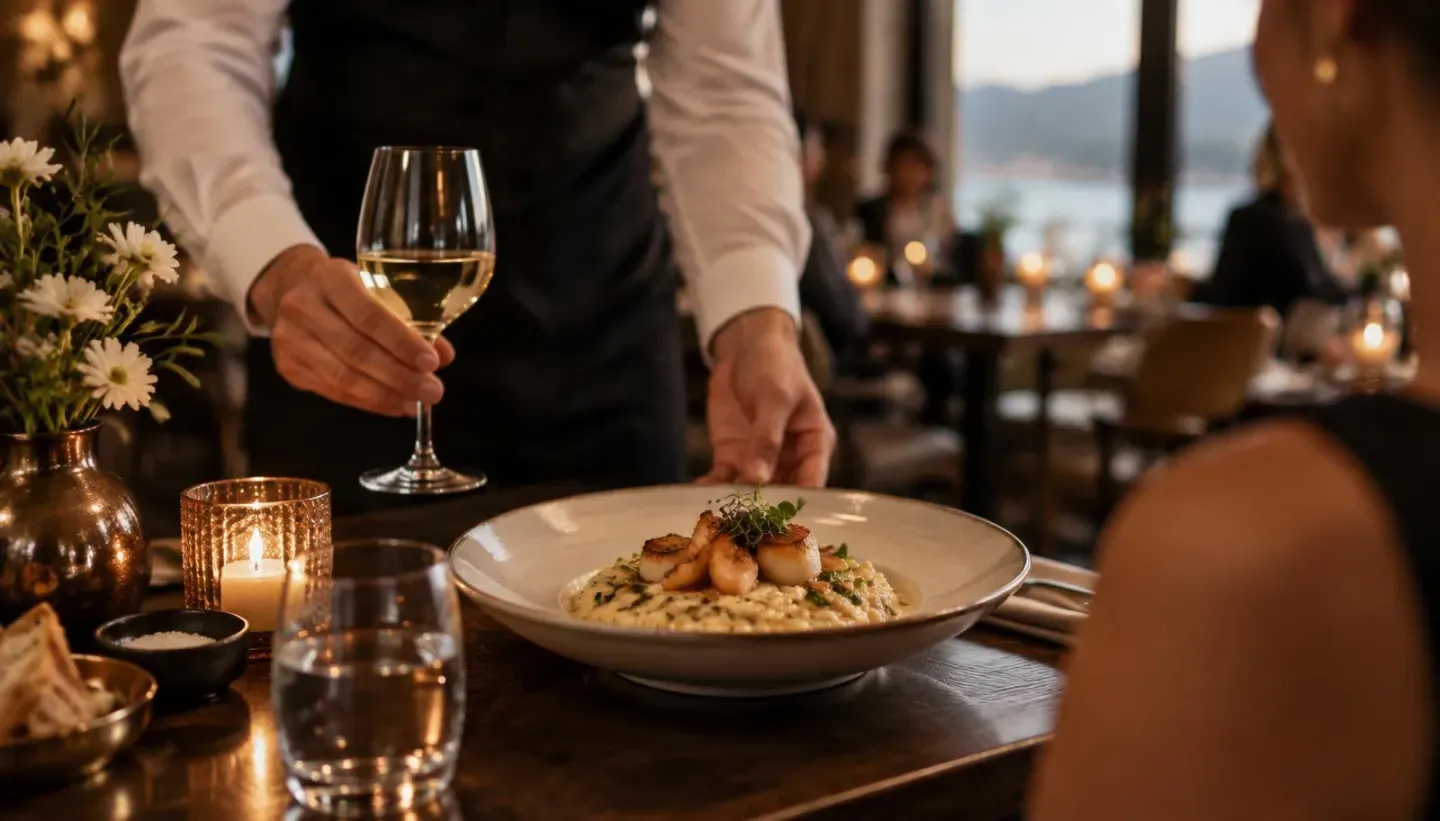
- Tie it to what the guest is already doing. “I see you are going for the seafood risotto...”
- Give a simple reason, no sommelier jargon. “...something fresh and mineral, a white, sits nicely with it.”
- Offer a no-pressure way out. “I can bring a glass to try before you commit to a bottle?”
No “I recommend,” no “our selection,” no price first. The guest gets help deciding, not another attempt to sell, and that is exactly why they buy.
68% of guests we surveyed said they would order a pricier drink with a short explanation (Tablehint guest survey, n=279).
How do staff actually learn this, and remember it?
Not with a wine lecture. A server has no time for a course and no need to become a sommelier. They need three things: a few safe pairings for the dishes on your menu, the three sentences above, and practice on real situations until it is a reflex.
The fastest way is short drills: “the guest ordered X, what do you say?” followed by quick feedback. That is what the Tablehint staff training app does systematically: daily quizzes and ready pairings for your menu. Your staff learn on a short walk to the bar, not in a seminar.

What happens when a good server leaves?
That is where most restaurants lose the most. The one who knew the menu and knew how to recommend leaves, and the knowledge leaves with them. The new hire starts from zero, guests get weaker service, the average check drops, and no one connects it to one person’s departure. What that departure costs is broken down in our article on the hidden cost of staff turnover.
The fix is keeping the knowledge outside any single person’s head, in a tool every new server gets on day one. The same principle applies to the menu itself: the difference between a plain QR menu and a smart menu is precisely whether the screen does anything for the staff or only for the guest.
Where do you start this week?
You do not need a system to begin. Pick the five most common dishes on your menu and write two safe drinks next to each, one safe, one slightly pricier. Teach staff the three sentences. Over a week, listen to how they land at the table and adjust. Once it works on paper, a tool just speeds it up and holds the standard, so your best server is, in practice, always on shift.
Frequently asked questions
Not if it starts from their dish and offers a no-pressure way out, such as a glass to try. It is pushy when it starts from the product and the price.
No. They need a few safe pairings for your menu and three sentences. Depth comes with time; selling starts with the basics.
The basic set of pairings and lines within a few shifts. The reflex takes a couple of weeks of real practice.
Yes. In a casual spot the recommendation is even shorter, but the logic is identical.
Track the share of tables that order a drink with their meal, and the average check before and after. The change shows up quickly.
All questions